VISIT MY OTHER BLOGS TOO !!

geniooscar.blogspot.com
sofianwinardi.blogspot.com
erwinukar.blogspot.com

or, want to buy something??
visit:
g_shop.kassa9.com

THANK'S!!^^

CATEGORIES

free counters

my best song

Tampilkan postingan dengan label PC Games. Tampilkan semua postingan

Warfare 1917


Warfare 1917 is a rather excellent World War I strategy title from Con Artist at Armor Games that we overlooked a couple of months ago. Although I suspect that this game's popularity is mostly due to the thrill of watching little army men get tossed around by mortar shells, the author is respectful of his source material, providing a well-balanced and historically rooted collection of ground units and fire support options. The gung-ho cries of your troops make it hard to watch them fall in battle, and if you waste too many lives, you run the risk of losing the battle to low morale.
You can choose to play a full campaign as either the British or the Germans. Win each skirmish by reaching the opposite side of the battlefield with your troops, or alternately by reducing the enemy morale to the point of surrender. What makes Warfare 1917 interesting is the use of trenches as strategic choke points. Since your operating space is essentially a one-dimensional horizontal line, you must be conscious of each of your units' strength and firing range, both in and out of the dirt.
A system of experience points and a wide range of upgrades make the campaign worth replaying, and if you ever just want a quick battle, there is a customizable one-shot skirmish mode. Early versions of Warfare 1917 had some balance issues, especially once the virtually invincible tanks entered the fray, but version 1.2 has things hammered out pretty well. It's a real gem of a wargame that works on more levels than just pew pew pew KABOOM. Though certainly it provides that as well.
CLICK HERE TO DOWNLOAD IT !^^
HOPE U ENJOY IT !^^

Warfare 1944

This new real-time strategy game fromCon Artist teaches us some valuable lessons about the evolution of 20th-century combat. In the years between World War I and II, we abandoned trench lines for the makeshift cover of hedges and tombstones, and every battlefield became exactly three times as wide. If Hitler had thought to keep a machine gun squad entrenched on his center row, while sending Storm Troopers along the top and bottom, we might all be speaking German today.
That's the hook in Warfare 1944, a sequel to a game that was already one of the most engrossing casual strategy games on the web. Your soldiers still start at one end of the screen and advance horizontally to the other, but this time there are three planes of battle, opening up the possibility of flanking maneuvers or even bypassing some defenses completely.
The game can be played with only the mouse. Choose a squad type from the menu at lower right, then click on the row where you want to deploy them. The soldiers will charge into battle from off-screen, automatically attacking opposing units in their own row or in adjacent ones. While they are in the field, you can give them specific orders by clicking on them and then selecting an icon from the bottom menu, or with the [number] hotkeys on your keyboard. Win battles either by advancing all the way across the map, or by destroying the enemy's morale.
This is a cover-based game. Your units will automatically hold their positions at defensive lines scattered about the map until you tell them to move. Leap-frogging from one entrenchment to the next gives the gameplay its shape, since a soldier in the open is much, much more vulnerable to the whims of every passing bullet. Keep in mind that a single instance of cover can only support one squad, and the next one will just leap right over and get itself killed if you bunch them up.
The campaign mode tells a miniature story of the Normandy Invasion as the Allies push from the coast through Northern France. You can select either the easier U.S. campaign or the more defense-oriented German one, both of which take you through 8 missions concentrating on different units and terrain.
Warfare1944Based on your performance in each mission, you will accumulate experience that can be spent on training and equipment. There are plenty of options for both passive and active upgrades, which lets you adjust the game to your own micromanagement comfort level. Abilities like air strikes and grenades require giving a unit specific orders, while the permanent upgrades like additional firepower will allow you to focus on sending reinforcements, rather than babysitting the units on the field.
When you're done with both campaigns, you can still set up individual skirmishes to your taste. Choose your flavor of battlefield, difficulty, and even specific unit types. There is no multiplayer, but frankly this game is crying out for it. The single-player experience is terrific but short, and I want to test my skills against a human general.
Analysis: The flexible upgrade options give Warfare 1944 good replay value. I found it reasonable at first to just pile up my soldiers with guns and courage and send them off freely into battle, but the lure of smoke bombs and air strikes kept me re-campaigning in order to try out all the toys. The highest layer of upgrades are all powerful and fun, and it's convenient to be able to take two different skill paths to reach your favorites.
That's where Warfare 1944 is exceptional: in its subtlety. There are so many workable strategies, so much potential power in each specific unit, so many parries to each thrust, that you can fight through the game by reflex and instinct. That enemy tank is always a game-changer, but you've got bazookas, grenades, mortars, and artillery, even if you can't muster a quick tank of your own.
Warfare1944This is probably Con Artist's prettiest game so far, taking you through highly-detailed graveyards, fields, and townscapes. No need of dramatic anthems here; the cries of warriors and the stutter of machine guns are your theme music. The realism has a down-side — at a glance, the tiny soldiers sometimes blend squintingly into the background, and one looks a lot like another, whether they're carrying rifles or bazookas. And oh, what I would give for a mini-map! It's so easy to forget you have a spare assault squad crouched behind a row of sandbags, when you have to scroll the screen all the way across the battlefield to find them.
Con Artist's hyper-awareness of balance restrictions is probably overkill for a simple strategy game with a small variety of units. Considering the time lag between reinforcements, the experience point cost for new abilities, the resource cost for units, and the strict upper limit on the resource pool itself, it can feel like Warfare 1944 would rather not be played at all. Gameplay is sometimes less about effective strategy, and more about exploiting all the interlocking systems to get a large group of soldiers attacking in parallel. Preferably with a friendly tank in tow.
When you can't quite co-ordinate that unstoppable Blitzkrieg, though, when you're hanging onto each hedge row and stone wall by the grit on your fingernails, when the difference between victory and death-by-Panzer is a single bazooka shell... well, this game will grip you by the guts and squeeze as hard as anything else on the internet.
It's mightily easy to care about these straightforward walking soldiers. They fall prone under fire, they take solemn aim, they dolphin tragically through the air when a mortar strikes. When they're off-screen, I expect they smoke heavy cigars and crack jokes about brothels. Your mind's mission may be to win the war, but your heart's mission is to protect your men. That's quite an accomplishment for a little Flash game.
HOPE U ENJOY IT !^^

Heroes of Might and Magic IV


The Heroes of Might and Magic strategy series dates back to 1990 with the series' precursor, King's Bounty. Since then, the series has given rise to three games and several expansion packs over the course of about a decade. But none of that history really seems to matter at this point. The last game was released in 1999, and devoted Heroes fans--the group that developer New World Computing has worked hardest to please--have had more than enough time to play Heroes III to death. And as you might expect from hard-core fans, these dedicated Heroes players have demanded that Heroes IV be both completely fresh and new--but also that it remains true to the core gameplay of the series. And it turns out that Heroes IV succeeds in doing both, so if you're a serious Heroes fan, you can stop reading now and pick up a copy of the game if you haven't already.
If you're not a die-hard fan of the Heroes series but have heard something about it, you might know that it's a series of turn-based strategy games that take place in a colorful fantasy setting, which is actually the same universe as the one in New World's Might and Magic role-playing series. And Heroes IV's essential formula is similar to that of the previous games. You create a hero character specialized either in magic or in might (physical combat). From an initial town, this hero raises an army of troops and ventures out to explore the map, capture resources and items, and conquer enemy towns and armies. Each hero type corresponds to a different town type; and each town produces different types of monsters and soldiers you can recruit for your army. This is Heroes IV at its most basic level, and this formula is at least as engaging and addictive in the new game as it's ever been in the series. If you've ever played a game in the Heroes series, you're probably familiar with the almost insidious way that the games keep you playing for hours. You conduct your exploration and conquest over the course of many turns, and the games always coax just one more turn out of you to capture that last gold mine, treasure chest, or artifact.
Heroes IV does an even better job of being this addictive. This is true, thanks to its well-designed maps, which are all jam-packed with treasures, resources, artifacts, and event-triggering buildings that can do all sorts of things, including temporarily strengthening your heroes, giving them quests, and letting them recruit new creatures for their armies. And despite the fact that Heroes IV has no multiplayer options to speak of, there's no shortage of maps to keep you busy. The game itself has six full campaign games, lots of individual scenario maps, and a full campaign editor that lets you create your own custom scenario maps (and connect them into a custom campaign if you wish). You'll also find a typical game session packed with different options to choose. You'll have to choose the composition of your armies wisely, as well as choose from a great variety of skills that your heroes will learn as they grow stronger.
When you first play Heroes IV, all of the game's new options may seem foreign, even bewildering--even if you're a veteran Heroes player. Right off the bat, Heroes IV has added several new features that have crept in from other turn-based strategy games. Like Age of Wonders and Warlords, Heroes IV lets you resolve some fights by using a quick combat option that takes far less time than standard tactical combat. And like this year's Disciples II, Heroes IV has wandering monsters (that will move across the map and attack you) and a branching path of development for your armies. As with other Heroes games, you need to buy creature buildings in your town to recruit new creatures, but in Heroes IV, you must choose between monsters of a comparable level. Instead of buying up as many creature-generating buildings as possible, you'll need to choose whether you want minotaurs or evil eyes, for instance, or choose between black dragons or titans. These choices may seem limiting, but they actually keep each of the game's different town types (or "alignments" as they're referred to in Heroes IV) interesting over the course of the game. In many cases, your choices can help you develop an army that consists of mostly fast-moving flying units, long-ranged archers, magic users, or close-range melee brawlers. And every creature in Heroes IV has at least one distinctive ability, if not two or three or four, so between your armies' abilities and the ability to include multiple hero characters in the same war party, you should have no trouble creating a powerful, versatile army or two.
As in the previous games, your armies will do battle with both wandering monsters and the armies of enemy heroes. Heroes IV's combat system has a number of minor changes that are intended mainly to make combat a bit more balanced. Previous games in the Heroes series had been criticized for allowing too much momentum; that is, if you could create a powerful enough army, nothing could stand in your way. Heroes IV's system of simultaneous attacks (in which most creatures attack and take damage from each other simultaneously) and its new line-of-fire aiming for ranged units mean that you can't continuously blunder forward and pummel your enemies to death. Fortunately, your forces can call upon their own special abilities in combat, including the ability to cast some magic spells, just like a spell-casting hero. Heroes IV retains Heroes III's basic system of magic (both in combat and out of it) and improves upon it by slightly rearranging some older spells and also letting heroes become grandmasters in a specific school of magic. Through your many fights and raids, your heroes will accrue great numbers of experience points that will in turn lead to new skills. There are lots of old and new skills in Heroes IV--more than enough to help you create distinctive heroes.
While your heroes will definitely seem more distinctive, Heroes IV's graphics unfortunately aren't. The series was previously well known for its colorful, storybooklike portraits and units, which often had humorous animations and funny sound samples. Unfortunately, most of Heroes IV's characters and units are represented by the same kind of generic-looking rendered sprites that appeared in Might and Magic VII and VIII. Heroes IV's creatures don't look horrible; each is represented well enough to distinguish them at a glance, but they simply aren't the memorable and occasionally goofy denizens of Heroes I and II. Instead, Heroes IV features stiffly animated 3D-rendered sprites that seem less like fantastic mythical creatures and more like stop-motion movie monsters. Outside of battle, Heroes IV's town and overland graphics are clearly intended to paint a picture of a brightly colored, otherworldly realm, but the same sort of density that makes exploring Heroes IV such a joy also makes it occasionally difficult to look at. Heroes IV's overland areas sometimes seem too bright and colorful--there's too much going on at one time on the screen. This can make distinguishing important objects from background scenery needlessly difficult, and, along with the game's equally busy-looking interface menus, may make the game seem overly complex to new players.
But just about anyone--Heroes veterans or newcomers--will be able to appreciate Heroes IV's sound, especially its music. Heroes IV's sound effects aren't the least bit noteworthy, and many were recycled directly from the previous game, but the soundtrack is another matter entirely. Developer New World decided to split the difference between the synth instrumental soundtrack of Heroes III and the operatic soundtrack of Heroes II and include elements of both. While you're in battle, you'll hear the same sort of stirring, yet subdued, background music as in Heroes III--percussion- and string-heavy instrumental arrangements that suit battles well. And while you're exploring the overland map or developing your town, you'll be treated to the same sort of lush opera music that graced the Heroes II soundtrack.
Heroes IV has a lot of new additions, but ultimately, it still plays like a Heroes game. That's definitely a good thing, as the Heroes formula clearly stands the test of time in Heroes IV and is every bit as enjoyable as it's ever been in previous games. An overly cynical (and not entirely accurate) way to assess the game would be to call it a revamped version of Heroes III with a new coat of paint--or many, many layers of paint. However, it's really to New World Computing's credit that the developer was able to incorporate so many new and interesting features into this sequel while still making sure it kept all the core elements that made all the previous games so great. Heroes IV is clearly a worthy successor to the series and has very clearly been worth the wait.
CLICK HERE TO GET IT !

Counter strike Extreme version 5


Counter Strike Xtreme V5 (2011/ENG)
PC | ENG | Developer: Sierra | Publisher: Bluelytning | Year: 2011 | 794 MB
Genre: FPS, Action

The new version of a fan assembly CounterStrike! essentially the same CS online only offline with bots. this is a plus for those who because of the ping can not normally play on Chinese servers and can also be oprobyvat weapons available in the CSO only Donat of 1.6 was perhaps that the multiplayer and the principle of normal
System requirements:
Processor: AMD Athlon 1200 + / Intel Pentium 3 1.2 GHz
RAM: 256 MB
Video Card: nVidia GeForce 2 MX / ATI Radeon 7xxx

PECULIARITIES Games
Added about 20 weapons and player models (which is added and not replaced)
* Effects of the murder
* Its sounds for each weapon
* New special effects
* Highlighting Weapons
* Included in the assembly of six mods: Human Scenario, Deathmatch, Zombie Mod, ZombieScenario plus new effects and animation
* Fixed errors when connecting
* Works search servers
* Added patch solves the problem with error Component MSCOMCTL.OCX of one of its dependencies not correctly registered ...


Game modes
Normal classic game
Human Scenario hold several rounds of mercenaries and to endure in the last round to destroy the helicopter
In order that would play in this mode to disable bots and run the map hs_desertstorm otherwise the game may hang
Deathmatch a team game on a team with instant respawn
Ghost Mod you against a team of ghosts are barely visible and they are armed only with knives
Zombie Mod the classic zombie mod. an infected attempts to infect all the others
Zombie Scenario alone against hordes of zombies. need to survive and destroy the main and ghouls


CLICK HERE TO GET IT !^^

Dynasty


A delightful and unique matching game with a twist on the classic matching and marble-popping styles. Help to free the baby dragons from their eggs and collect rewards. Get help along your journey, as well as gold beyond your wildest dreams. If you're lucky, you might even get help from the majestic Super Dragon! A beautiful soundtrack accompanies your travel through each of the 30 worlds contained in the game.
  • 30 worlds in each game mode.
  • Beautiful soundtrack.
  • Zen moments between levels.

VIEWS:


CLICK HERE TO DOWNLOAD IT !^^
HOPE U ENJOY IT!^^

virtual villager-the secret city

Once more Isola beckons, luring you back to its sun-drenched shores in this third installment of the Virtual Villagers series. And, like its predecessor, Virtual Villagers: The Secret City deposits your fledgling tribe on a new part of the isle. This time, however, you begin in the ruins of a once-great city to the north, exploring, rebuilding and repopulating while unraveling its numerous mysteries.

As with the first two chapters in the saga, this latest excursion into paradise serves up a familiarly persistent game world. Daily activities such as eating, drinking, washing, gathering food, building and repairing structures, making babies and, eventually, severing this mortal coil transpire whether viewed or not. Depart Isola for several hours and, upon returning, you’ll discover your villagers have been busy. Leave your tribe unattended too long, though, and you may find them dead from starvation.

Much of what you’ve come to expect of Virtual Villagers remains intact, including play mechanics. Click on a villager and their name, skill and action are displayed. Additional stats, on the Details screen, convey age, gender, health, likes, dislikes, time remaining if nursing a child, and progress in the skills of Farming, Building, Research, Healing and Parenting.

Influencing behavior hasn’t changed either. Teaching a tribe member to “build” is as simple as dropping them on a structure. In like fashion, depositing a villager at a table will encourage research, plunking them in the ocean will persuade them to fish (you’ll have to rid the ocean of sharks first) and “nudging” them into a tribe mate of the opposite sex will engender procreative abilities. Nonetheless, villagers aren’t always successful on the first try. Several attempts may be needed, but eventually the behavior will stick. On the occasion one of your little namesakes just won’t cooperate, try a different skill.

Conversely, some things have changed in The Secret City. Real-time weather now includes clouds, sunbeams, fog, thunder and sudden down pours. The latter cause villagers to abandon tasks and scamper for cover, as well as play a role in solving a few of the game’s 16 puzzles. You also have a chief to rule your tribe and contribute to your village’s growth, and several new food sources to stave off hunger. As before, potions spice up the game’s action, as well as provide solutions to several conundrums.

Technologies have changed slightly once more. Science and Medicine return, but Alchemy, Restoration and Leadership replace Farming, Engineering, Exploration and Culture. Two new Factions, Nature and Magic, alter the flow of the game slightly. The former replenishes food more quickly and increases longevity, while the latter boosts scientific productivity and maximum population.

Children, who still resemble their parents, have four new collections to gather – Turtle Shells, Coral, Tablet pieces and Feathers. Additionally, the online leader board has been replaced with an in-game achievement system. Awards, ten in all, include Child Prodigy (reach master before age 18), Jack of All Trades (master all five skills) and The Doctor Is In (cure 30 villagers of disease). Of course, new random events appear sporadically.

As with its forerunners, results aren’t immediate. It takes time to grow a village, even running full-tilt (speed options are Paused, Slow, Normal and Fast). Accomplishing one task often requires completing another first, or advancing a level or two in one or more technologies. So, bide your time and take advantage of the game’s relaxed play. Avoid the tendency to micro-manage your tribe by the minute. Instead, take frequent breaks from Isola and get on with the rest of your life while your villagers go about theirs.

Virtual Villagers: The Secret City is addictive. If ant colonies enthralled you as a kid, you’ll enjoy this diversion even more. In short order, you’ll become attached to your villagers, relishing their achievements, being frustrated at their failures and grieving their death. Isola’s world is a charming one, visually and audibly splendid. Replay value is high, thanks to variables like factions and events. You can even run several games simultaneously (though, one of your tribes is bound to suffer neglect).

But, Isola is not without its rocky shores. Zoom capability would be a welcome feature to augment map view, as would the capacity to group villagers by task. An “Extra Fast” game speed would assist for speeding through some of the more tedious aspects of play. And, the ability for children to gather collectables without assist would be a thoughtful extra. An increase in resolution wouldn’t hurt either.

While Virtual Villagers: The Secret City won’t appeal to casual gamers seeking a quick fix, it offers an engaging, entertaining and rewarding experience for those willing to make the investment. But, beware! This latest tropical delight may make it virtually impossible to manage the rest of your life.
VIEWS:

 
CLICK HERE TO DOWNLOAD IT!!^^
HOPE U ENJOY IT!^^

Magic Ball 2

Magic Ball 2 offers a pseudo-3D translation of the classic Atari game, Breakout. In this game, you slide a crossbow-shaped bumper along the bottom of a two-dimensional plane as you bounce a ball back into a playing field to break blocks. There are 100 levels in Magic Ball 2; each depicts a 3D-block scene of sorts that looks like a child's Lego creation. Some are pastoral scenes with grazing cows, while others are more futuristic-looking.
No matter what the field looks like, though, your job is to break all the blocks on the playing field. As you break blocks, power-ups and hazards will fall toward the bottom of the screen. Some power-ups will increase the number of balls on the playing field or change the physical properties of the balls. The hazards can reduce the size of your bumper or even cause an instant death. The best power-ups are the ones that attack Nerflike blasters to your paddle, allowing you to blast the blocks directly. Even though there isn't much to Magic Ball 2, it's a fun game for what it is.

VIEWS:

 
LIKE IT??
CLICK HERE TO DOWNLOAD IT!!^^
HOPE U ENJOY IT!!^^

Beetle Bug 2

Beetle Bug 2
Genre: Arcade Game
Release Date:
14 July 2007
Game Rating : Bettle Bug 2 3 star
 rating

Beetle needs to defend his home underground from the evil invaders and he needs your help. Each level is like a maze and with your logic, wit and weapons you will need to succeed. You need to fly around and dig your way through barriers to get by in this side-scrolling adventure game. Watch out for those enemies and falling rocks! Search every inch of beetles home for extra bonus levels which are scattered about.
Download and play Beetle Bug 2 NOW!
Minimum Requirements
OS: Windows 2000, XP, Vista
CPU: 600MHz or faster
Processor RAM: 128 MB

CLICK HERE TO DOWNLOAD IT!!
HOPE U ENJOY IT!!^^

Fiber Twig


It might have a funny name, but the challenge of Fiber Twig is anything but.

The Good

  • Very rewarding challenge.

The Bad

  • Might be too hard for some  
  • Graphics are a little corny.
If you're a veteran of puzzle games and have been around the block enough times to appreciate a great challenge, Fiber Twig just might be the game for you. In fact, the game plays very similarly to an old classic, Pipe Dream. The difference here is that instead of connecting pieces of plumbing to make water flow, you're creating branches on a tree. You're given a constantly flowing array of pieces to choose from, and you must place the pieces on the tree to create a section of a branch that ends in a knot. Once you successfully place your pieces, the level scrolls to the top of the screen, and you repeat the process until you reach the very top. The game moves along at a decent clip, requiring you to think quickly and not back yourself into a corner. Fiber Twig presents a great deal of challenge, although it's one that's quite worth it.

VIEWS:

 
CLICK HERE TO DOWNLOAD IT!!
HOPE U ENJOY IT!!^^

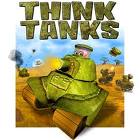
Think Tanks


Think Tanks, developed by BraveTree Productions and published by Garage Games.
The Good: Playable physics, sufficient AI, smooth on-line play
The Not So Good: Very odd and obtuse aiming
What say you? A fairly average tank combat game spoiled by bizarre turret controls: 5/8

MY POORLY WRITTEN INTRODUCTION
Ever since they were invented near the end of World War I (also known as the War Between the States), tanks have always been a mark of power on the battlefield. Featuring thick armor and huge guns, tanks strike fear into the hearts of the opposing army. Not surprisingly, tanks have become a featured component of computer games, appearing in titles ranging from tank simulators to more arcade offerings. Think Tanks leans more heavily towards the arcade side of the equation, offering the chance to control small tanks driving around battlefields lobbing explosives at each other. Sounds like fun to me! Think Tanks is very similar to another tank combat game, Battle Carry, which I reviewed back in the Dark Ages (2005). Will Think Tanks improve where Battle Carry fell short? Only time will tell.

GRAPHICS AND SOUND
Think Tanks has rather average 3-D graphics compared to other titles. The graphics do run a range from bright levels to dark and gloomy ones, so that is greatly appreciated; in a lot of games, each level feels the same as the last one, but this is not the case in Think Tanks. The levels don’t have very many details to them, mostly just open areas dotted with hills and some trees and rocks. It seems strange to have intense tank battles over such a barren area. The tanks themselves look OK, with some technical achievements in the small details. I think if more time was spent to create realistic-looking levels (like those found in Battlefield 2, for example) it would add to the overall appeal of the game. I believe that Think Tanks has the power to do so using their graphics engine, it’s just a matter of doing it. The sound falls along the same lines, falling within the realm of averageness (that almost sounds like a word). The game has the basic sound effects heard in tank battles (explosions, weapons firing, et cetera), but not much else, such as environmental effects. The background music is there, but is not memorable. Considering the lower-end budget of Think Tanks, the fact that the graphics and sound ended up in the middle of the pack is a small achievement resulting in a game that won’t be scored for shortcomings in those areas.

ET AL.
Being a tank combat game, the object in Think Tanks is to destroy the opposition using your turreted weapons. The action is definitely arcade in nature, having fast moving tanks and quick firing weapons. You can play Think Tanks against the AI or online. The AI in the game is pretty good: they don’t exhibit any expert behavior, but will engage heavily damage opponents, chase down objectives, and generally behave like beginning players. It’s certainly a step up from the single player experience found in Battlefield 2. Joining an online game is pretty easy and is a very smooth experience; I didn’t experience any lag while playing. You can also play against bots and have them leave the server when real humans join the fray. The game can be played as a deathmatch or “scrum:” scrum is similar to the Bombing Run mode in Unreal Tournament (maybe a little too similar), where you carry a single flag (or ball) to the goal in order to score. Both of these games can be played with teams as well. This is above the number of games modes found in a lot of comparable titles, but I’d still like to see some more originality with the features. There is a single player “story” mode of sorts where you battle increasingly powerful AI tanks. This mode is kind of unfair, since all the AI tanks fight against you and you’re always outnumbered.

In order to help your cause, there are weapon and health powerups scattered throughout the map. You can use these to your advantage in your chosen tank; there are three classes of tanks (light, medium, and heavy) and each offers increased armor and weapons for decreased speed and maneuverability. Weapon powerups include area-effect projectiles or bouncing shells, although the game doesn’t tell you what a particular weapon does. You see, Think Tanks doesn’t have any indications on your current weapon ammunition, weapon type, or health level, so you’re just relying on whether your tank is smoking or not or a guess on how many bullets you have left. Control freaks will not appreciate this very much. The arcade disposition of the game is offset a bit by the fact that it takes a lot of direct hits in order to destroy opposing tanks; I would have liked it to be a much quicker path to death to keep with the overall theme of the game. Think Tanks does have some good physics, much better than those found in Battle Carry, resulting in tanks that are fairly easy to control. The game maps are scattered with jump pads and speed boosters; these can be used to your advantage in order to avoid incoming shells. The biggest (and close to only) problem with Think Tanks is the tank turret aiming. Aiming is done with the mouse, but it’s not intuitive and seems to lag heavily, making it difficult to precisely destroy enemy tanks. Since the whole point of the game is to take out conflicting tanks, this is a major deal. I had quite a difficult time just trying to get the crosshairs on a moving enemy tank. Complicating the aiming is the fact that you can only aim in front of you; for some reason, your turret cannot rotate a full 180 degrees, unlike most (if not all) modern tanks. This makes it maddeningly difficult to follow and shoot successfully at enemy tanks, and adds a level of frustration that’s not necessary.

IN CLOSING
Just like the other tank combat game, Think Tanks is a good game that’s blemished by one key deficiency: in this case, aiming. The features of Think Tanks all point towards a good game: decent AI, decent graphics, decent game modes, and decent physics add up to a decent arcade tank combat game. Add in the fact that Think Tanks is available on all three major platforms (Mac, Linux, and, uh, what’s that third one called?) and you’ve got a winner, except for the annoying aiming. Based on the fact that the online servers were pretty well populated for a smaller game, maybe you get used to the aiming over time, but I feel it should be more instinctive at first. You shouldn’t have a difficult time controlling your turret, but Think Tanks makes it an excruciating process. If you can get past the aiming, you’ll find that Think Tanks is pretty fun to play, especially for its low price and features pretty much everything you’d want to see in a tank combat game.

VIEW:

 
LOOKS GOOD??
CLICK HERE TO DOWNLOAD IT!!^^
HOPE U ENJOY IT!!^^

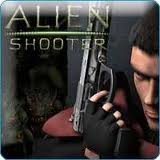
Reflexive Alien Shooter


Take a wild guess at what a game called "Alien Shooter" entails. You're right! In Alien Shooter, you shoot at aliens. The game takes place from an isometric perspective, and you control a man or a woman with the task of running around a variety of facilities, turning on the power, and blasting aliens with a handful of different weapons. You run around with the keyboard, and the mouse is used to aim and fire. Generally speaking, it works pretty well; but all in all, the game feels like a clunky take on the same aim-and-fire mechanics used in Crimsonland. Also, enemies and power-ups can often hide themselves up against walls due to the game's isometric view of the action. While the game does have some depth to it--you can purchase additional weapons--the action is generally unsatisfying, though the way that all the corridors get smeared with alien corpses and blood after a prolonged firefight at least looks nice.

VIEW:

CLICK HERE TO DOWNLOAD IT!!
HOPE U ENJOY IT!!^^

Ant War

Ant war is a simple little game from Anarchy Enterprises and Party Top.


The graphics are simplistic but colorful.
Battles are very minimal and not so fun.

Your the leader of a tiny colony of ants, with a very simple victory condition: Grow your colony from humble origins to a grand total of one billion ants. It won't be easy, as your colony will be beset by rival ants, other insects, and a variety of enemies who will either kill your ants, destroy parts of your colony, or destroy your food stocks.

At start your given an opportunity to name your colony, and to pick the type of ant you would like to play as. The selection includes:

Leaf cutter ants, which are good at saving food. They also find more special food bonuses, so this help your growth, as food is essential for ant growth.

Harvester ants, which are good at finding food, and they find more food items each day, but average at storing food.

Weaver ants, which are good at reproducing. They make new ants and find gems easier, but they are poor at combat.

Carpenter ants, which are natural engineers, are good at digging, and they make your nest grow faster.

Fire ants are good at combat, and will find more enemies to combat.

Once your selection is made, you move on to the actual game, which is set up like the simple DOS games of years ago, and relies very heavily on text, and includes little game play or interaction with the player.

Basically, you start your game in Mr Suburbia's backyard, and you have the option to move to a number of other locations, which includes both food, growth, and other benefits, as well as negatives. The game displays a calender with a weather forecast, and this determines how well your digging, food search, and explanation will go each day.

Your first job is to determine the ratio of your four branches of colony operation, namely scouts to find food, nurses to breed more ants, workers to dig and maintain the colony, and soldiers to fight with. You can set the percentages to any thing you like, but it's best to get a balance, gather more food at first, and soldiers aren't really needed early. A good early balance is 60% scouts, 20% nurses and 20% workers. Your advisor, who is always visible on the upper right hand side of the screen will tell you if this combination is working, and warn you if you need to change it. He's called Adam ant, and like all the characters in this game, is portrayed in cartoonish and campy style. You also gets information and advice from grandpa ant, who pops up periodically.

You can improve your ant's ability through the buying of enhancements, this is done by finds gems, which are used as currency, and you can spend it in the ant bank on various items. Also, you can only change your location if you pay gems and food.


There are some minor RPG overtones such as leveling up.
You can choose from a handful of Ants, depending on what you need them to do.

Once your selections are made, and ratios set, you leave the start screen for the backyard screen. This is a cartoon example of a backyard, and like all the visuals in this game, seems to be aimed at the younger gammers. Your colony appears in the center of the screen, and gets larger as it actually grows. The amount of ants is displayed as a colored bar graph on the screen bottom, and rises and falls as events happen.

The events are text messages on the upper left, accompanied by little pictures representing the events, and usually involve finding and losing food at first, and the occasional enemy approaching. A few events (between one ond five) will appear as text, and the day ends, you go back to the sub screens.

Once you find a few gems, you can move to the following locations, paying food and gems for each:

Rose's Garden
The garden is a beautiful spot to live, especially in the spring months.

Mr. Suburbia's House
The house will keep you safe when the weather outside is rough…and keep an eye out for leftovers in the kitchen (in winter and during rain, your colony is best served by being indoors).

Spring Valley Bridge
Crossing the bridge gets you to and from town. Just watch out for all the traffic, as it will damage the colony and kill ants.

The Stream
The stream is the beginning of the wilderness and connects you to Farmer Brown's farm, and is not a good place for your colony.

The Field
The 'battle' field is the place if you want to test your soldiers and have lots of fights. Battles in Ant war is represented very simply, a screen appears showing your ants (in little helmets) and your enemy in a separate box. Depending on the size of the colony, the weapons you have bought with gems, and your battle experience, a simple hit/miss procedure is used. The game will warn you if it thinks your over-matched. You mouse click, and if you win, you get gems and food, and if you lose, ants die. The battle animation is, like all the other parts of Ant war, minimalist.


The Forest
Deep in the forest you can find gems and encounter some wild animals. Be careful of the termites though, as they are difficult enemies.

Farmer Brown's Farm
Find lots of food bonuses at Farmer Brown's Farm. Just beware of his crazy chicken and mad cow, powerful enemies that attack often.

The Park
The park is a great place for parties and picnics. There's always lots of food around, especially in the summer months, so this helps.

The Sidewalk
The cracks in the sidewalk are great for building up your nest. Just be careful of all the humans walking around.

The Playground
The playground is the best spot in town for kids, so its good for your nursery too. The children will damage and attack the colony at times.

Martha's Bakery
Good food, good treat bonus. The bakery is a great spot for sweets, especially during the winter holidays.

Spring Valley School
Learn some fun facts about ants and raid the cafeteria. But not much to do here during summer break.

Spring Valley Diner
This greasy spoon has lots of food for your ants, burgers, fries and spilled ketchup all provide for hungry ants.

The Beach
The beach is a safe place to relax…no battles happen here so your ants can kick back and relax. Come in the summer when humans drop lots of food.

The City Dump
One person's trash is another ant's treasure. There's plenty of food in the dump, but beware…the trash attracts lots of other ants as well, so plenty of battles here.

The Worm Hole
The worm hole lets you travel to any location on the map that you've already unlocked, as the other areas are layed out in a linear fashion, you can circumvent this with the wormhole, and go where you like anytime.

As your nest grows, your given a goal in ant population, and when reached, you get gems and food as a bonus. Also, as your nest grows, the messages begin to show the town, and eventually the world becoming concerned, and eventually you will be attacked often by scarred and annoyed humans, even the army arrives to stop you. But once you reach a million ants, your colony becomes virtually unbeatable, and no enemy can stop you from growing and reaching the billion ant total.


At the playground, kids will occasionally destroy your colony.
You can learn some fun facts about ants at the school.


CLICK HERE TO DOWNLOAD IT!!
HOPE U ENJOT IT!!^^